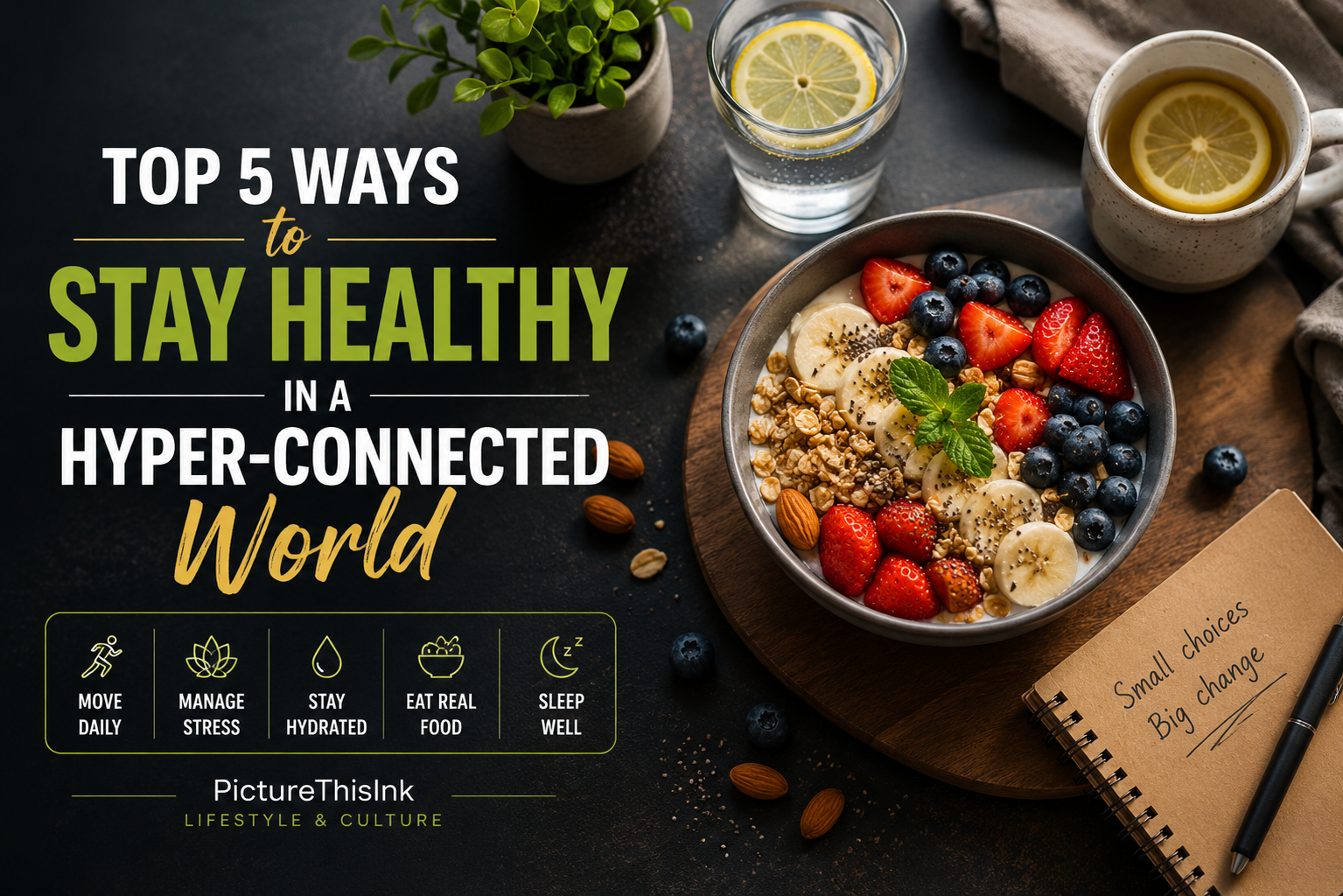
Top 5 Ways to Stay Healthy in a Hyper-Connected World
The Human Body Was Never Designed for Constant Stimulation
Modern life never fully powers down anymore.
Phones vibrate during meals. Notifications interrupt conversations. Screens glow late into the night while people scroll through information faster than the mind can properly process it. Even moments once considered quiet are now filled with digital noise competing for attention.
The modern world rewards speed, productivity, responsiveness, and constant connection.
But the human body still operates on rhythms far older than technology itself.
Sleep still matters. Rest still matters. Sunlight still matters. Silence still matters. Healthy food, movement, emotional balance, and mental clarity still matter no matter how advanced modern technology becomes.
That contradiction is shaping one of the biggest wellness conversations of this generation.
People are more connected digitally than ever before, yet many feel physically exhausted, mentally overwhelmed, emotionally distracted, and increasingly disconnected from their own well-being.
The challenge is no longer simply surviving modern life.
The challenge is staying healthy inside it.
Movement Has Become More Important Than Ever
Many modern jobs now revolve around sitting in front of screens for hours at a time. Meetings happen virtually. Shopping happens digitally. Entertainment streams directly into homes. Even social interaction increasingly happens through phones and laptops instead of physical environments.
As convenience increases, movement quietly disappears.
That shift is affecting both physical and mental health.
Simple daily movement has become one of the most important forms of modern wellness because the human body was never designed for endless inactivity. Walking, stretching, biking, jogging, yoga, and even short outdoor movement breaks can dramatically improve energy, focus, circulation, and emotional balance.
Research continues showing strong links between physical movement and reduced anxiety, improved mood, and stronger cognitive performance. Even short walks outdoors can help reset mental focus after extended screen exposure.
Movement is no longer only about fitness.
It is becoming a form of recovery from digital life itself.
That may be why walking trails, parks, fitness communities, and wellness-focused routines are becoming increasingly popular among people trying to rebalance modern lifestyles.
Mental Health Requires Boundaries Now
One of the most difficult realities of modern technology is that the internet never truly stops.
There is always another update, another video, another email, another headline, another notification, another algorithm trying to keep people emotionally engaged for as long as possible.
Without boundaries, digital life can slowly consume emotional space that once belonged to rest, reflection, and calm thinking.
That is why mental wellness now requires intentional protection.
People are increasingly creating no-phone hours, reducing unnecessary notifications, limiting social media exposure, and designing routines that allow the mind to breathe without constant stimulation.
These small choices may appear insignificant at first, but they create enormous emotional impact over time.
A quiet morning without scrolling can change the emotional tone of an entire day. An evening walk without headphones can help thoughts settle naturally. A meal eaten without screens can restore a sense of presence many people no longer realize they miss.
Mental health in the modern world is no longer only about reacting to stress.
It is about reducing unnecessary stress before it takes control.
Real Food Is Quietly Becoming a Luxury Again
Fast lifestyles often create fast eating habits.
Processed meals, delivery apps, energy drinks, excessive caffeine, and convenience-based eating have become deeply connected to modern work culture. Many people eat while scrolling, working, driving, or multitasking instead of actually slowing down long enough to experience meals intentionally.
But nutrition affects far more than physical appearance.
Food influences focus, sleep quality, emotional stability, energy levels, inflammation, and even long-term mental health.
That realization is helping create a growing cultural shift toward mindful nutrition and simpler wellness habits.
Fresh fruit, hydration, balanced meals, natural ingredients, lighter foods, and intentional eating routines are becoming symbols of modern self-care rather than temporary health trends.
People are beginning to understand that wellness is not built through extreme routines alone.
It is built through small daily choices repeated consistently over time.
Even preparing breakfast quietly without screens can become a form of mental reset in a world constantly demanding attention elsewhere.
Sleep May Be the Most Underrated Form of Wellness
Modern culture spent years glorifying exhaustion.
Busy schedules became status symbols. Hustle culture celebrated overworking. Sleep deprivation was often treated like proof of ambition instead of a warning sign that the body needed recovery.
Now the conversation is changing.
People are finally beginning to understand how deeply sleep affects nearly every part of physical and emotional health.
Poor sleep impacts concentration, emotional regulation, immune function, stress levels, memory, creativity, and long-term wellness. Yet modern technology often works directly against healthy sleep habits through blue light exposure, late-night scrolling, endless stimulation, and constant mental engagement before bed.
That is why many wellness experts now recommend creating nighttime routines that intentionally slow the nervous system down before sleep.
Dim lighting. Reduced screen exposure. Quiet music. Reading. Meditation. Silence. Consistent sleep schedules.
These habits may appear simple, but they help restore rhythms modern life often disrupts daily.
The body heals during rest.
The mind resets during stillness.
And in a hyper-connected world, quality sleep may quietly become one of the most powerful forms of self-care available.
The Future of Wellness Is Balance
The goal is not abandoning modern life completely.
Technology itself is not the enemy.
Phones connect families. Wearables help monitor health. Smart devices improve accessibility, organization, and communication. Digital tools have created opportunities that previous generations could barely imagine.
The problem begins when connection becomes constant without recovery.
Balance is becoming the defining wellness skill of modern culture.
People are slowly learning that healthy living is no longer only about diet or exercise. It is also about emotional energy, attention management, digital habits, rest, mindfulness, and intentional living inside a world designed to keep people permanently stimulated.
That balance looks different for everyone.
For some people, it means taking walks outdoors. For others, it means limiting social media exposure, improving sleep habits, drinking more water, creating quiet routines, or simply learning how to slow down long enough to feel present again.
Small habits create larger lifestyles.
And healthier lifestyles create stronger futures.
Closing Reflection
The modern world moves fast.
Probably faster than humans were ever fully prepared for.
But health is not found by trying to outrun technology.
It is found by learning how to live alongside it without losing the parts of life that make people feel human in the first place.
Sunlight still matters. Sleep still matters. Quiet still matters. Movement still matters. Real conversations still matter. Peace still matters.
In a world filled with endless updates, constant connection, and digital overload, staying healthy may become less about perfection and more about protecting balance wherever possible.
Because the healthiest future may not belong to the people who stay connected every second.
It may belong to the people who remember when to slow down.