The Digital World Has a Physical Backbone: Inside the Rise of Data Centers and the Future of Modern Life
Most People Never Think About Where the Internet Lives
Every streamed movie, AI-generated image, online payment, social media post, video call, and cloud-stored photo feels invisible. Modern technology feels almost weightless because people interact with it through screens, apps, and wireless signals every day.
But the digital world is not floating magically in the air.
It lives inside buildings.
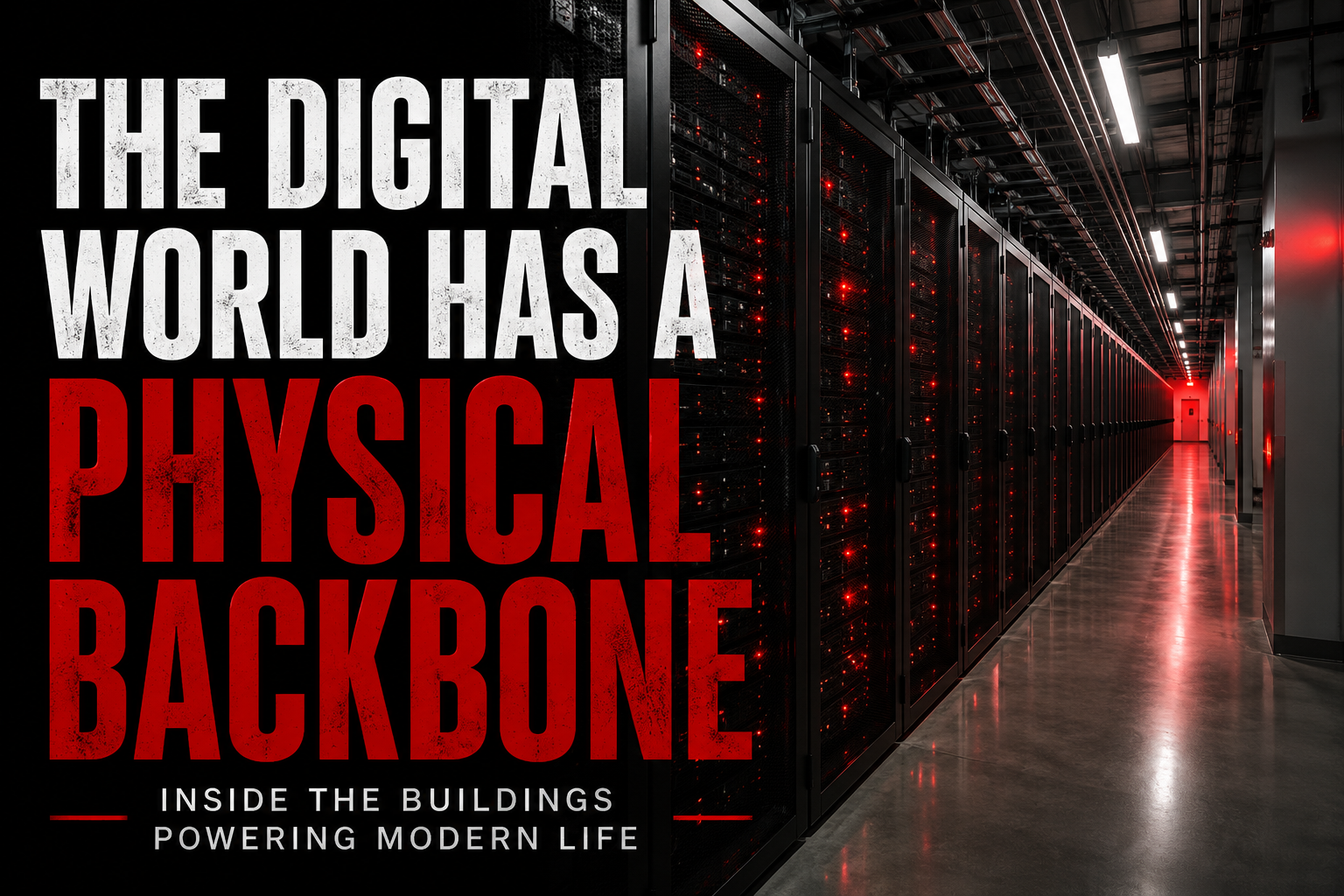
Massive buildings filled with servers, cooling systems, backup generators, electrical equipment, networking infrastructure, and endless rows of machines running every second of every day.
These buildings are called data centers.
And right now, they are becoming one of the most important pieces of infrastructure shaping the future of modern civilization.
Most people rarely think about them because they operate quietly behind the scenes. They do not attract attention like smartphones, electric vehicles, or artificial intelligence tools. Yet nearly every major technological advancement now depends on these facilities operating continuously without interruption.
The modern world no longer runs only on roads, factories, and office towers.
It increasingly runs on data.
And data requires physical infrastructure powerful enough to support modern life.
The AI Boom Changed Everything
For years, data centers existed mostly outside public conversation. They quietly powered websites, cloud storage, business systems, and internet services while technology companies focused on the visible side of innovation.
Artificial intelligence changed that almost overnight.
The rise of AI systems dramatically increased global demand for computing power, storage capacity, electricity, and digital infrastructure. AI models require enormous processing capability to train, operate, and respond instantly to millions of users simultaneously.
That demand triggered a massive construction boom across parts of the United States and around the world.
Technology companies are now racing to build larger and more advanced facilities capable of supporting the next era of artificial intelligence, cloud computing, streaming platforms, cybersecurity systems, smart devices, and modern communication networks.
Entire regions are becoming technology infrastructure hubs because they offer access to land, energy, fiber networks, and scalability needed for long-term digital expansion.
The future of technology may feel digital.
But the systems supporting it are becoming increasingly physical.
The Internet Has a Real Environmental Footprint
One of the biggest misconceptions about modern technology is the belief that digital life is environmentally invisible.
People often associate factories, manufacturing plants, and industrial systems with resource consumption, while cloud services and AI platforms feel clean simply because they exist online.
But every AI interaction, streamed movie, cloud backup, and digital transaction still requires real-world infrastructure operating somewhere behind the scenes.
Data centers consume enormous amounts of electricity because servers must run continuously without failure. These facilities also generate significant heat, which means cooling systems become essential to prevent equipment from overheating.
Many cooling systems rely heavily on water usage.
As more data centers are built across states like Georgia, Virginia, Texas, and Arizona, communities are increasingly discussing long-term concerns surrounding energy demand, water resources, sustainability, and infrastructure strain.
Artificial intelligence accelerated these concerns because AI systems require dramatically more computing power than traditional internet activity.
The future of digital technology depends on physical resources many people rarely consider while scrolling through apps or interacting with AI systems online.
That reality is forcing governments, utility companies, businesses, and local communities to think differently about technological growth and long-term sustainability.
Why Homeowners Are Paying Attention
For many people, data centers once seemed disconnected from everyday life.
That perception is changing quickly.
As facilities expand closer to suburban areas and growing communities, homeowners are beginning to ask important questions about how these projects affect local neighborhoods, utilities, land development, energy systems, and quality of life.
Some communities welcome data centers because they create jobs, attract investment, increase tax revenue, and support infrastructure growth connected to the expanding digital economy.
Large projects often create construction jobs, electrical work, HVAC opportunities, engineering positions, networking roles, security jobs, and long-term maintenance careers. Hotels, restaurants, suppliers, and local businesses may also benefit during major construction phases.
For many cities, data centers represent economic opportunity and future technological relevance.
But concerns exist as well.
Some residents worry about increased water demand, higher electricity usage, noise from cooling systems, environmental strain, traffic during construction, and the transformation of quieter suburban areas into large-scale industrial technology zones.
The discussion surrounding data centers is no longer only about technology.
It is becoming a conversation about communities, infrastructure, sustainability, economics, and the future of modern development itself.
The New Industrial Revolution Is Happening Quietly
Factories once represented industrial power.
Today, data infrastructure is beginning to play a similar role.
Data centers are becoming the backbone of artificial intelligence, healthcare systems, financial networks, entertainment platforms, cloud services, logistics systems, cybersecurity operations, research institutions, and communication technologies used daily across the world.
What makes this transformation fascinating is how quiet it appears from the outside.
There are no massive smokestacks or roaring assembly lines. Many facilities look almost invisible from nearby roads.
But inside those buildings, enormous amounts of information move constantly through machines shaping the future of modern civilization in real time.
The modern industrial revolution no longer sounds like heavy machinery dominating factory floors.
It sounds like cooling systems humming quietly while servers process billions of digital interactions every second.
That shift may become one of the defining transformations of this century.
Technology Is Reshaping Geography
One of the most interesting effects of the data center boom is how it is changing geography itself.
Technology companies are no longer choosing locations based only on office culture or urban prestige. They are increasingly choosing areas based on land availability, access to electricity, cooling potential, water supply, tax incentives, fiber infrastructure, and long-term scalability.
This is reshaping entire regions.
Some smaller cities and suburban communities are becoming strategic infrastructure centers because they can support future digital expansion better than crowded urban environments.
That creates both opportunity and responsibility.
Communities now face important conversations about balancing economic growth with environmental sustainability and long-term planning.
These are no longer niche technology issues discussed only inside corporate boardrooms.
They are becoming public conversations directly affecting homeowners, workers, local governments, and the future of regional development across the country.
Why Data Centers Matter to the Future of America
Many experts now view data centers as strategic infrastructure rather than optional technology projects.
Without powerful infrastructure, the United States cannot continue scaling artificial intelligence, cloud computing, cybersecurity systems, scientific research, financial technology, or modern communication networks at the pace global competition now demands.
That is one reason governments and technology companies continue investing heavily in digital infrastructure expansion.
Many believe the countries leading artificial intelligence and advanced computing over the next decade may also shape the future of economic power, innovation, defense systems, and global technological influence.
That makes infrastructure critically important.
The future of AI does not depend only on software.
It depends on the physical systems capable of powering it.
At the same time, communities still want responsible development, sustainable resource planning, and long-term environmental awareness as these projects continue expanding.
That balance may become one of the most important technology conversations of the next generation.
Closing Reflection
For years, the internet felt abstract.
Clouds. Streams. Wireless signals. Virtual platforms.
But the future is revealing something much deeper.
Every digital convenience still depends on physical infrastructure somewhere in the real world. Every AI interaction depends on energy systems, cooling technology, land, water, labor, engineering, and enormous coordination happening quietly behind the scenes.
The internet may feel invisible.
But its backbone is becoming impossible to ignore.
And as artificial intelligence continues reshaping modern life, one of the biggest questions society may face is not simply how advanced technology becomes.
It is how humanity chooses to build, power, and sustain the infrastructure behind it responsibly.