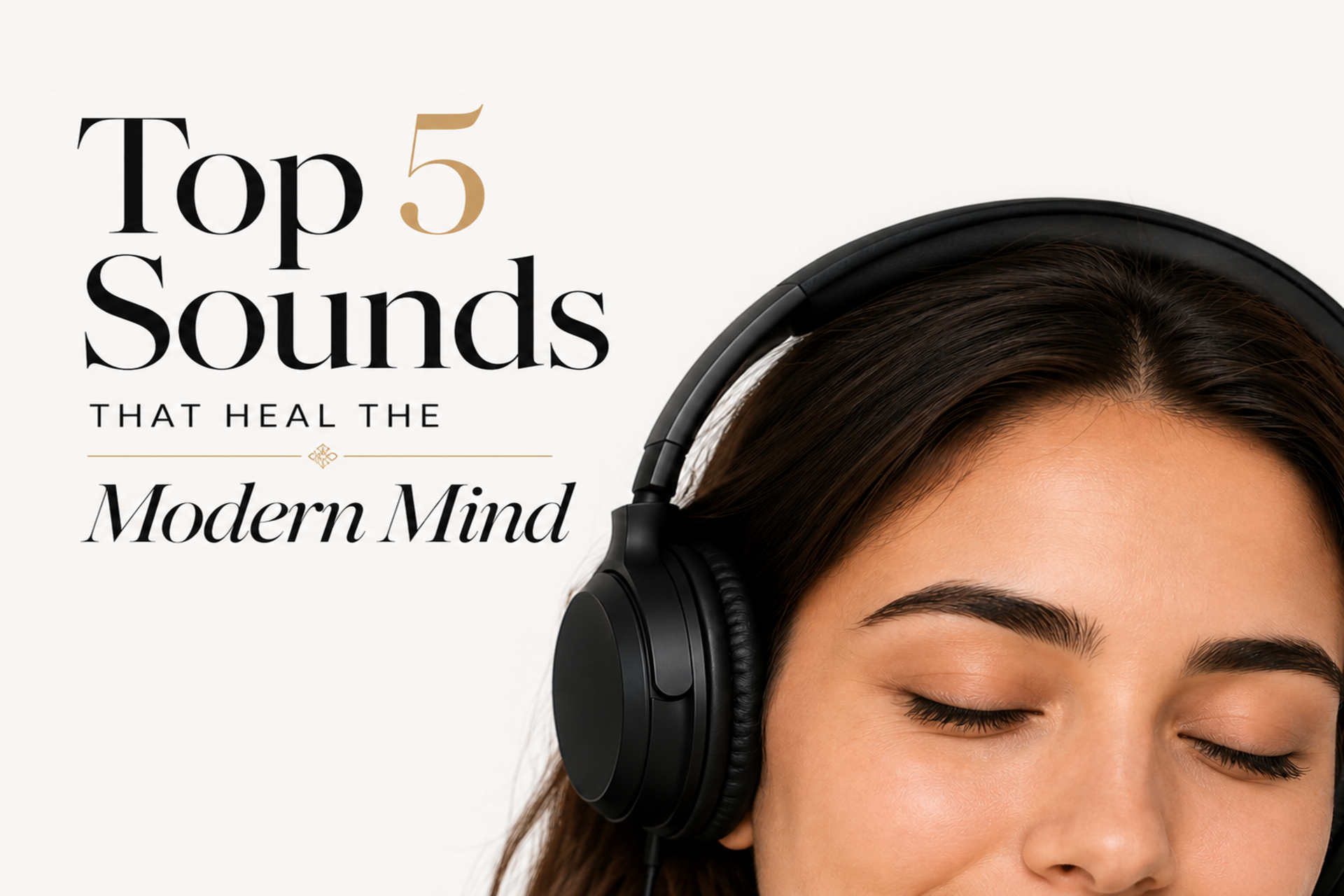
Top 5 Sounds That Heal the Modern Mind
The Story Begins
There comes a point when sound stops feeling like background noise and starts feeling like medicine. In a world where notifications vibrate every few seconds, traffic hums through every street, and screens constantly compete for attention, the modern mind rarely experiences true stillness. Most people do not realize how exhausted they are until they finally hear something that allows their nervous system to soften.
I remember sitting alone late one night with the city glowing outside my window. My laptop was still open, messages were still coming in, and my brain felt overstimulated from hours of scrolling, working, and absorbing information. Instead of putting on another playlist full of lyrics and noise, I searched for a simple ambient rain track mixed with low-frequency tones and soft wind chimes. Within minutes, something shifted. My breathing slowed down. The tension in my shoulders eased. The room felt quieter, but more importantly, my mind felt quieter.
That experience revealed something powerful. Healing does not always arrive through dramatic transformations. Sometimes it arrives through frequency, rhythm, vibration, and silence. Sound has become one of the most overlooked forms of mental recovery in the digital age, and in 2026 more people are beginning to understand that what we hear every day directly affects how we think, sleep, focus, and emotionally function.
These are five sound experiences helping people reset their minds in a world that never truly goes silent.
White Noise and Binaural Beats: The Invisible Pulse
White noise has existed for decades, but today it is experiencing a new wave of popularity because modern life has become louder and more mentally fragmented than ever before. White noise works because it creates a stable audio environment. Instead of your brain reacting to random distractions like horns, conversations, notifications, or sudden sounds, it hears one consistent layer of sound that smooths everything together.
For many people, white noise feels like mental insulation. It reduces the sharpness of distraction and creates an atmosphere where the brain no longer feels forced to constantly scan for interruptions. This is one reason why people use white noise while sleeping, studying, writing, or even working in busy environments.
Binaural beats take this concept further. Instead of simply masking noise, binaural beats attempt to influence the brain’s internal rhythm. Different frequencies are played into each ear, and the brain perceives a third tone created from the difference between the two. Some researchers believe this can encourage the brain to move toward calmer states associated with relaxation, meditation, focus, or sleep.
The science is still evolving, and not every study reaches the same conclusion. A 2023 systematic review published through PubMed found that binaural beats may influence brainwave activity, although results remain inconsistent depending on the listener and the listening conditions. Even with mixed findings, millions of people continue using them because of the calming psychological effect they report experiencing.
What matters most is not whether a sound trend becomes a miracle cure. What matters is the growing realization that sound can shape mental states more deeply than people once believed.
Rain Sounds and Storm Atmospheres: Calm in the Concrete Jungle
Rain has become one of the most searched calming sounds on the internet for a reason. There is something deeply grounding about hearing water fall steadily against rooftops, windows, sidewalks, and distant streets. Unlike modern digital noise, rain feels organic and emotionally neutral. It does not demand attention. It simply exists.
For people living in crowded cities surrounded by traffic, advertisements, alarms, and constant stimulation, rain sounds often create the feeling of temporary escape. The brain stops anticipating sudden changes and begins relaxing into the consistency of the soundscape.
Researchers have explored this effect in stress-related studies. A 2019 study examining rain sound exposure found reductions in stress markers and improvements in mood during mentally demanding tasks. Participants listening to rain sounds experienced calmer physiological responses compared to silence during stressful arithmetic testing.
What makes rain especially powerful is its ability to soften mental overactivity. Many people report that rain sounds help them think less aggressively. Instead of racing through worries, deadlines, or overstimulation, the brain gradually shifts into a slower rhythm.
This may explain why rain playlists, thunderstorm videos, and ambient weather channels continue dominating streaming platforms. In a culture built around urgency, rain reminds the nervous system that not every moment requires reaction.
Sound Baths and Analog Frequencies: Ritual Instead of Noise
Modern technology delivers endless sound instantly, but many people are beginning to crave sound experiences that feel intentional instead of algorithmic. This is partly why sound baths, Tibetan singing bowls, tuning forks, gongs, and analog healing frequencies have become increasingly popular.
A sound bath is not simply background music. It is an immersive experience where vibration becomes the focus. Participants often lie still with their eyes closed while layered tones wash over the body. Some people describe it as meditative. Others describe it as emotional release. What makes these experiences unique is that they encourage stillness rather than stimulation.
A study published through the National Center for Biotechnology Information found that participants in singing bowl meditation sessions reported significantly lower tension, fatigue, anger, and depressed mood after the experience. While the exact mechanisms are still being studied, the emotional effects appear very real for many listeners.
Part of the appeal may come from the fact that these sounds feel ancient and human. Unlike social media audio designed to capture attention, analog sound healing encourages surrender and reflection. It invites people to slow down instead of speeding up.
In many ways, sound baths represent a rebellion against overstimulation. They transform listening from passive consumption into intentional recovery.
The Frequencies Around Us Are Never Neutral
Most people think sound is just entertainment, but sound is also influence. Every notification, movie soundtrack, radio station, store playlist, and social media clip is engineered to trigger a response. Fast tempos increase stimulation. Deep bass creates intensity. Softer ambient frequencies slow the nervous system down.
Music producers understand this deeply. Advertisers understand this. Even retail stores and restaurants use sound strategically to shape mood and behavior. Certain frequencies can increase tension while others encourage calm. Rhythm can change emotional energy. Tempo can affect attention span. Sound is constantly interacting with the brain whether we consciously notice it or not.
Scientists have studied how rhythm and frequency affect memory, focus, stress, and emotional regulation for decades. This is why a peaceful rainstorm feels completely different from an emergency alarm, and why one song can instantly transport someone emotionally back to a specific memory or moment in life.
The modern world has become a nonstop frequency environment. We are constantly absorbing sound from devices, platforms, speakers, advertisements, and digital spaces. Most people underestimate how much this shapes their emotional state throughout the day.
That is why intentional listening matters now more than ever. Not every frequency heals, and not every sound is harmless. Some sounds drain the mind while others restore it. Learning the difference may become one of the most important mental health skills of the digital age.
Silence: The Most Ignored Healing Sound
Ironically, one of the most healing sounds may not be a sound at all.
Silence has become incredibly rare in the modern world. Most people wake up to alarms, move through crowded digital environments, stream content throughout the day, and fall asleep with televisions, podcasts, or scrolling feeds still active. The brain rarely experiences uninterrupted quiet.
Yet silence can function as a reset button for mental overload. Neuroscience research continues showing that reduced auditory stimulation helps improve attention, concentration, and emotional regulation. Without constant sensory input, the brain gains space to process thought more naturally.
Many people initially feel uncomfortable in silence because it forces them to encounter their own thoughts without distraction. But over time, silence becomes restorative rather than intimidating. It allows the nervous system to stop defending itself against constant input.
Ten minutes of silence can feel more powerful than an hour of entertainment when the mind has been overstimulated for days. Silence creates clarity. It slows internal chaos. It gives emotions room to settle.
In 2026, silence may become one of the greatest luxuries people can still access for free.
Nature Sounds: The Original Healing Frequency
Long before headphones, streaming platforms, or wellness apps existed, the human brain evolved alongside natural sound. Wind moving through trees, rivers flowing over stone, birds communicating at sunrise, insects vibrating through summer air — these were the original soundscapes of human existence.
Today, many people spend most of their lives surrounded by artificial frequencies generated by engines, electronics, screens, speakers, and machinery. As a result, natural sound often feels emotionally refreshing because the nervous system recognizes it on a deeper level.
Multiple studies continue supporting the psychological benefits of nature sound exposure. Researchers have linked natural sound environments to improved mood, reduced stress hormones, enhanced focus, and better cognitive recovery after mental fatigue.
There is also something psychologically freeing about sounds that are not engineered for profit or engagement. Nature does not attempt to manipulate attention. It simply exists in rhythm. That authenticity can feel profoundly calming in a world increasingly shaped by algorithms.
Even brief exposure to natural sound can create noticeable shifts in mood. A walk through a park without headphones, sitting near moving water, or listening to birds in the early morning can interrupt the cycle of mental overstimulation many people now experience daily.
Nature sounds remind the brain what balance feels like.
Closing Reflection
Technology has given humanity unlimited access to sound, but unlimited access does not always create peace. In many ways, modern life has become a competition for attention where every platform, notification, advertisement, and algorithm fights to occupy mental space.
Healing begins when people become intentional about what they allow into their minds.
Whether it is white noise during work, rain sounds before sleep, a sound bath after an exhausting week, or simple silence in a dark room, these moments are not trends. They are forms of recovery. They are reminders that the nervous system was never designed for nonstop stimulation.
The modern mind is exhausted, but it is not beyond repair.
Sometimes the most powerful thing a person can do is pause, close their eyes, and listen carefully to something that asks nothing from them in return.
Because in a world that constantly demands attention, the right sound can still feel like sanctuary.