Healthy Habits for Your Credit: Small Steps Today Can Protect Your Financial Future Tomorrow
Most people think about their credit only when they need to borrow money. Whether it's applying for a mortgage, financing a vehicle, renting an apartment, or opening a new credit card, your credit history suddenly becomes one of the most important parts of your financial life. Unfortunately, many people spend years building good credit without giving much thought to protecting it. In today's digital world, where identity theft, online scams, and data breaches have become increasingly common, protecting your credit is just as important as building it. The good news is that developing healthy credit habits doesn't require hours of work each week. A few simple routines can help safeguard your financial future and provide peace of mind for years to come.
Good credit isn't only built through responsible borrowing—it is protected through responsible habits.
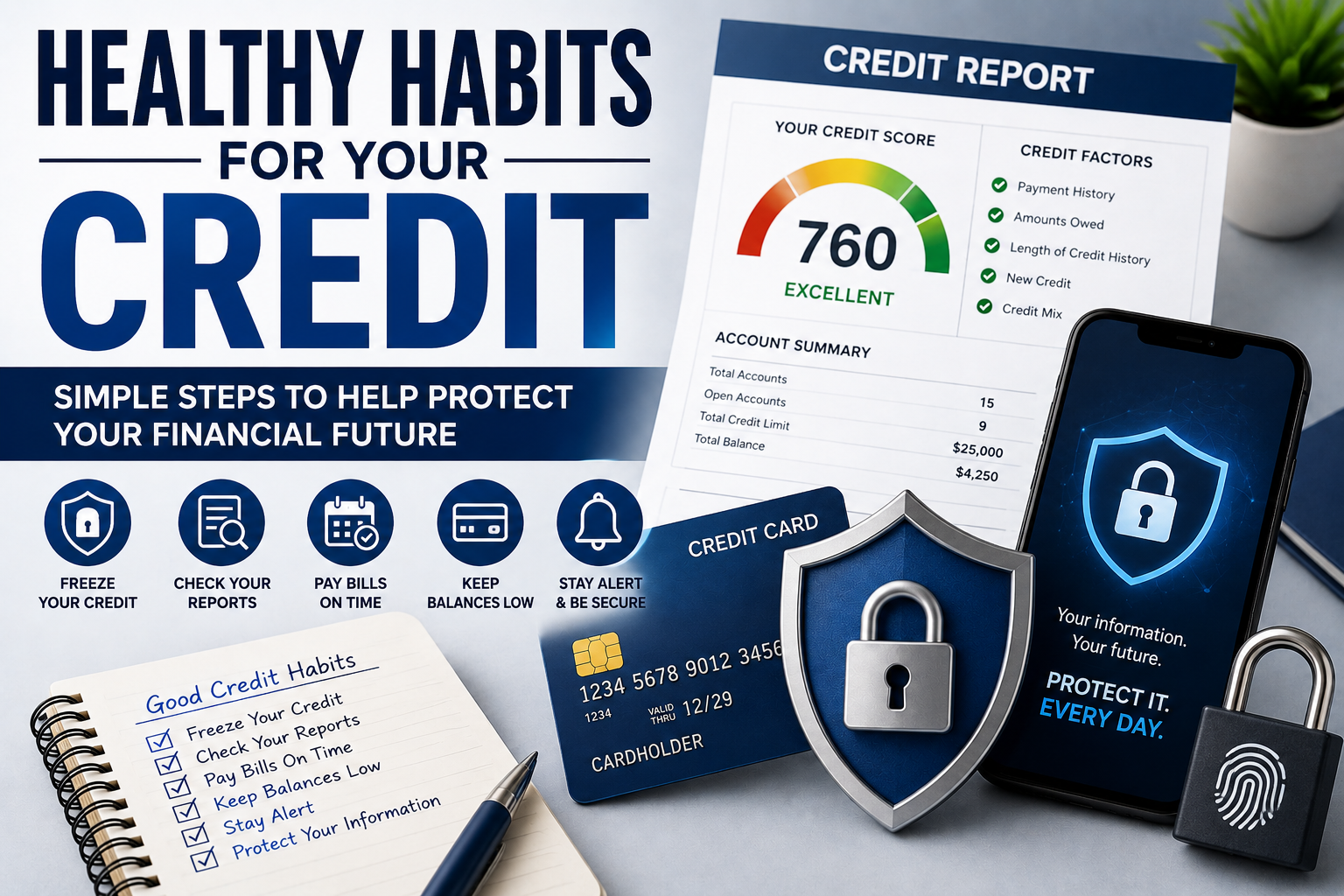
Freeze Your Credit Before You Need It
One of the most valuable yet underused tools available to consumers is a credit security freeze. Many people assume they should only freeze their credit after becoming the victim of identity theft, but that's exactly the opposite of how it was intended to be used. A security freeze helps prevent unauthorized lenders from accessing your credit report to open new accounts in your name. If you aren't planning to apply for new credit anytime soon, keeping your credit frozen can be one of the smartest decisions you make.
When the time comes to finance a home, purchase a vehicle, or apply for a new credit card, you can temporarily lift the freeze and then place it back once your application has been completed. The process is relatively simple, and many consumers find that the added protection is well worth the few minutes it takes to manage.
A credit freeze is like locking the front door to your financial identity before someone tries to break in.
Check Your Credit Before Someone Else Does
Your credit reports tell the story of your financial history, but that story isn't always perfect. Mistakes happen, and unfortunately, fraud can happen too. Reviewing your credit reports on a regular basis allows you to catch unfamiliar accounts, incorrect balances, unauthorized inquiries, or inaccurate personal information before those issues become much larger problems.
Many people don't discover fraud until they apply for a loan and are unexpectedly denied. By making it a habit to review your credit reports several times each year, you give yourself the opportunity to identify problems early and begin resolving them before they affect major financial decisions.
The sooner you discover a problem, the easier it usually is to fix.
Never Underestimate the Power of Paying on Time
Paying your bills on time may sound like basic financial advice, but it remains one of the strongest habits for maintaining healthy credit. Your payment history is one of the most significant factors lenders consider when evaluating your creditworthiness. Missing even one payment can remain on your credit history for years and may affect your ability to qualify for favorable interest rates in the future.
If you're worried about forgetting due dates, setting calendar reminders or enrolling in automatic payments can help keep your accounts current. Financial success is often built on consistency rather than perfection.
Healthy credit is created one on-time payment at a time.
Data Breaches Can Affect Anyone
Every year, companies across a wide range of industries announce data breaches involving customer information. Banks, retailers, healthcare providers, schools, and online businesses all work hard to secure their systems, yet cybercriminals continue searching for new ways to gain unauthorized access to personal information. The reality is that even if you do everything right, your information could still become exposed through a company you trust.
That's why developing healthy credit habits is so important. If you receive notification that your information may have been involved in a data breach, don't assume someone else will take care of it. Change your passwords, monitor your financial accounts, review your credit reports, and consider keeping your credit frozen until you need to apply for new credit.
Identity thieves don't always act immediately. Sometimes they wait months—or even years—before attempting to use stolen information.
Protect Your Information Wherever You Go
Today's consumers manage much of their financial lives from smartphones, tablets, and laptops. While that convenience makes everyday banking easier, it also creates new security risks, especially when using public Wi-Fi at airports, hotels, coffee shops, or other shared locations. Public networks may not always provide the level of security needed for sensitive financial activity.
Whenever possible, avoid accessing banking websites or financial accounts over public Wi-Fi. If you need to connect while traveling, using a trusted virtual private network (VPN) such as Norton VPN can help encrypt your internet connection and add another layer of privacy. A VPN isn't a replacement for freezing your credit or using strong passwords, but it can become another healthy habit that helps protect your personal information.
Protecting your connection is another way of protecting your financial future.
Small Habits Often Prevent Big Problems
Protecting your credit doesn't require complicated financial knowledge. It begins with paying attention. Reviewing your bank and credit card transactions regularly, enabling account alerts, creating strong and unique passwords, and turning on two-factor authentication all work together to reduce unnecessary risk. None of these habits takes much time, yet together they create multiple layers of protection around your financial identity.
Many people only become interested in credit protection after becoming victims of fraud. By then, the process of correcting fraudulent accounts, disputing inaccurate information, and restoring your financial reputation can take months or even years. Preventive habits are almost always easier than recovering from identity theft after it has already occurred.
The best security plan is the one you put in place before you ever need it.
Healthy Credit Is a Lifelong Habit
Your credit is one of your most valuable financial assets. It can influence where you live, how much you pay in interest, the loans you qualify for, and many of the opportunities available throughout your life. Building good credit takes patience, but protecting it requires consistent attention.
Freezing your credit when you aren't applying for new accounts, monitoring your credit reports, paying your bills on time, staying alert after data breaches, and protecting your online activity are simple habits that can make a meaningful difference over time. None of these steps guarantees you'll never become the victim of fraud, but together they can significantly reduce your risk and help you respond more quickly if something does happen.
Your financial future isn't protected by one big decision. It's protected by the small decisions you make every single day.