What Does Success Look Like in 2026?
Why More People Are Redefining Success on Their Own Terms
For decades, success followed a fairly predictable formula. People were encouraged to pursue a stable career, work their way up the ladder, purchase a home, accumulate possessions, and eventually retire after years of dedication to a single profession. While those goals remain important for many individuals, the definition of success is changing. Across different generations, lifestyles, and career paths, people are increasingly questioning whether traditional measures of success still align with what they truly want from life.
The shift is not necessarily about rejecting hard work or financial stability. Instead, it reflects a growing desire for flexibility, purpose, balance, and personal fulfillment. Advances in technology, changes in workplace culture, and the rise of digital opportunities have created new possibilities that previous generations did not have. As a result, many people are no longer following a single path toward success. They are creating their own.
The question is no longer simply how much money someone earns or what title appears on a business card. Increasingly, people are asking a different question: Does my life reflect what matters most to me?
The Traditional Definition of Success
For much of modern history, success was often measured through visible achievements. A higher salary, a larger home, a prestigious job title, and material possessions frequently served as indicators of progress. These milestones became deeply connected to the idea of achieving the American Dream and building a secure future.
There are understandable reasons why these goals became popular. Financial stability provides opportunities, security, and access to resources that can improve quality of life. Career advancement often reflects years of dedication and effort. Homeownership can create long-term stability and a sense of accomplishment. None of these achievements have lost their value.
However, many people have discovered that reaching traditional milestones does not always create the fulfillment they expected. A successful career may still leave someone feeling disconnected from family. A larger income may not necessarily create more happiness. A prestigious title may not provide the freedom or balance that an individual desires.
As a result, success is becoming more personal and less standardized.
The Rise of Lifestyle-Based Success
One of the most noticeable cultural shifts in recent years is the growing emphasis on lifestyle. Instead of asking what someone does for a living, people are increasingly interested in how they live.
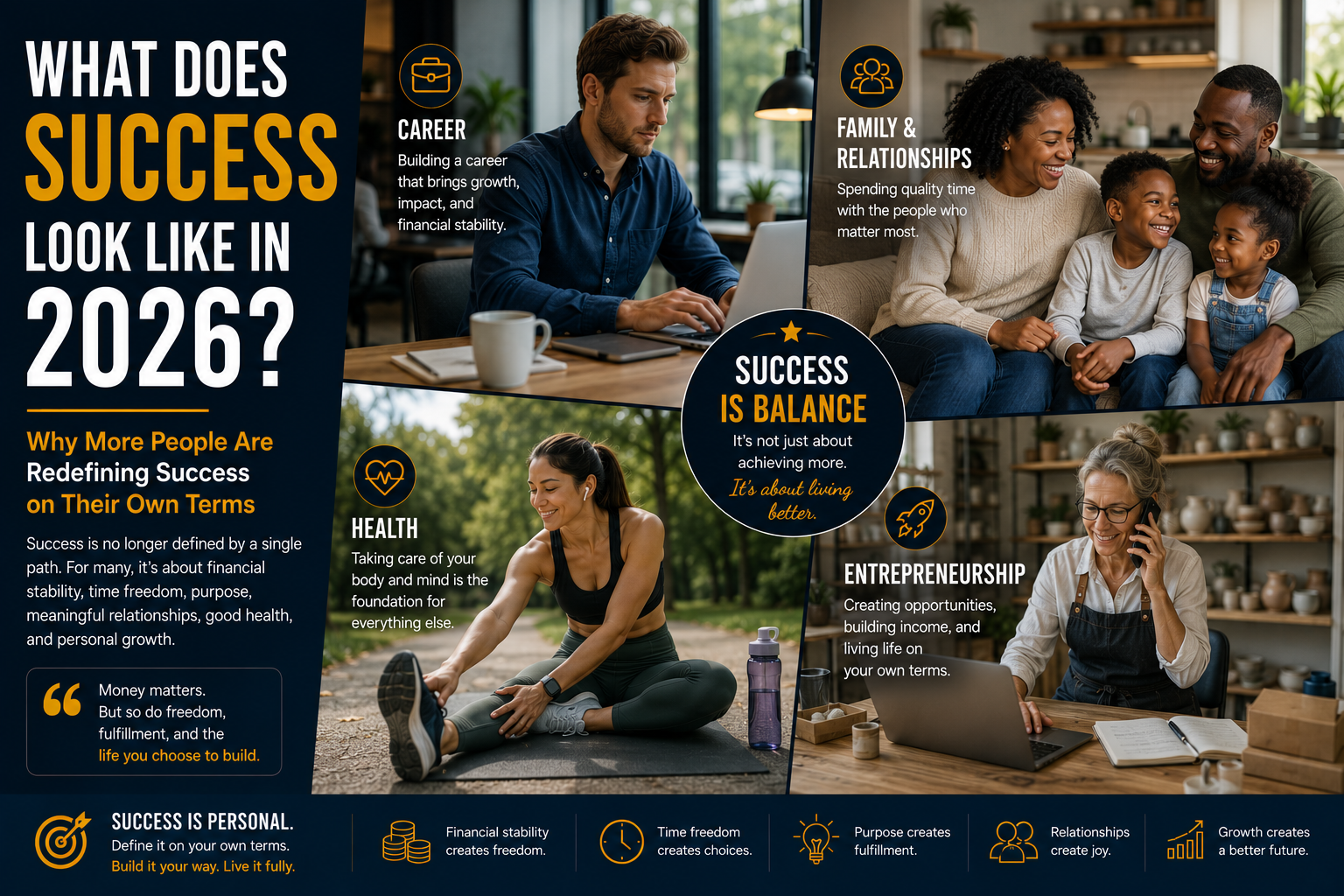
For some individuals, success means having the flexibility to work remotely. For others, it means spending more time with family, pursuing creative interests, traveling, volunteering, or building a business that aligns with personal values. These priorities often focus less on external validation and more on creating a life that feels meaningful.
Technology has played a significant role in this shift. Remote work, digital businesses, online education, and flexible career opportunities have given many people more control over their schedules than ever before. Individuals who once felt limited by geography or traditional employment structures can now explore alternative paths that better fit their goals.
This does not mean everyone wants the same lifestyle. It simply means more people are recognizing that success does not need to look identical for everyone.
Freedom Is Becoming a New Measure of Success
For many people, freedom has become one of the most valuable forms of wealth.
Freedom can mean different things depending on the individual. It may involve having control over one's schedule, choosing where to live, spending more time with loved ones, or pursuing work that feels meaningful. In many cases, people are prioritizing flexibility over status.
The ability to work from home, operate a digital business, freelance, or create content online has introduced opportunities that were uncommon only a generation ago. Technology has made it possible for individuals to generate income, build brands, and connect with audiences from virtually anywhere.
As a result, some people now view time and flexibility as equally important as financial compensation. Success is increasingly measured not only by what a person earns, but also by how much control they have over their daily lives.
Technology Has Changed the Conversation
Technology has done more than create new jobs and industries. It has fundamentally changed how people think about opportunity.
A student can learn new skills through online courses. An entrepreneur can launch a business from a laptop. A creator can build an audience through social media or independent publishing platforms. A professional can collaborate with clients across multiple countries without leaving home.
These opportunities have expanded the definition of what is possible.
Previous generations often followed established career paths because alternatives were limited. Today, technology has introduced new options that allow individuals to build careers and lifestyles that reflect their personal goals. While these opportunities require effort and commitment, they have given people greater freedom to pursue paths that may not have existed in the past.
The result is a more diverse understanding of success.
Success Is Becoming More Personal
One of the most significant changes taking place is the realization that success is highly personal.
Two individuals may have completely different visions of a successful life. One person may dream of leading a large organization. Another may prioritize family, creativity, and flexibility. Both paths can represent success if they align with the individual's values and goals.
This shift has encouraged many people to spend more time reflecting on what truly matters to them. Rather than pursuing goals based solely on social expectations, individuals are increasingly defining success according to their own priorities.
That process often requires honesty. It involves asking difficult questions about purpose, happiness, and long-term fulfillment. It may also require challenging assumptions about what achievement is supposed to look like.
While the answers vary from person to person, the willingness to ask these questions is becoming more common.
The Influence of Social Media
Social media has created both opportunities and challenges when it comes to defining success.
On one hand, digital platforms provide access to inspiring stories, educational content, and examples of individuals pursuing unique goals. People can learn from entrepreneurs, creators, educators, and professionals who have built successful careers in unconventional ways.
On the other hand, social media can create unrealistic comparisons. Highlight reels often present an incomplete picture of reality. Success may appear effortless when viewed through carefully curated content, even though genuine achievement typically requires years of work, setbacks, and persistence.
Because of this, many people are learning to separate personal goals from online expectations. Instead of chasing someone else's version of success, they are focusing on what genuinely aligns with their own values and aspirations.
The Role of Purpose and Fulfillment
Purpose has become an increasingly important part of the conversation surrounding success.
While financial security remains important, many people also want their work and daily activities to feel meaningful. They want to contribute, create, solve problems, and make a positive impact. Purpose provides a sense of direction that extends beyond income or status.
This desire can be seen across industries. Professionals seek careers that align with their values. Entrepreneurs build businesses around causes they care about. Creators produce content that educates, inspires, or entertains audiences. Individuals are looking for ways to connect their work to something larger than themselves.
Purpose does not eliminate challenges, but it often provides motivation during difficult periods. When people feel connected to what they are building, they are more likely to remain committed over the long term.
Success in a Rapidly Changing World
The world continues to evolve at a rapid pace. Technology, education, healthcare, business, and communication are all changing in ways that would have seemed extraordinary only a few decades ago. As society changes, definitions of success naturally evolve as well.
Future generations may prioritize entirely different goals than previous ones. They may place greater emphasis on flexibility, lifelong learning, entrepreneurship, digital skills, creativity, or experiences. What remains consistent is the desire to build a life that feels meaningful and rewarding.
Success is unlikely to become less important. However, the ways people pursue it may continue to diversify.
Looking Ahead
Perhaps the most important lesson of all is that success is not a one-size-fits-all concept. What brings fulfillment to one person may not bring fulfillment to another. The ability to define success independently may be one of the greatest opportunities available in the modern era.
Technology has expanded choices. Culture has become more diverse. Opportunities continue to evolve. As a result, people have more freedom than ever to pursue goals that align with their individual values and aspirations.
Rather than asking whether they are meeting someone else's expectations, many individuals are beginning to ask a more meaningful question: Am I building the life I truly want?
Closing Thoughts
Success in 2026 is not disappearing. It is evolving.
For some people, success will continue to mean career advancement, financial growth, and professional achievement. For others, it may mean flexibility, creativity, purpose, family, health, or personal freedom. Neither approach is inherently right or wrong.
What matters most is whether success reflects the values and priorities of the individual pursuing it.
As technology continues to reshape how people work, learn, communicate, and build opportunities, the ability to define success on one's own terms may become more important than ever. In a world filled with comparisons, expectations, and constant change, genuine success may not be measured by what others see. It may be measured by whether a person is living a life that feels meaningful to them.
Additional Resources
Continue Reading on PictureThisInk
People are redefining success in many ways, from building digital income streams and pursuing flexible careers to expanding educational opportunities and embracing new technologies. Explore more perspectives below:
How Ordinary People Are Using AI to Build Real Income in 2026
Can You Really Attend College for $0?
PictureThisInk® explores the intersection of technology, innovation, culture, education, and modern life. As the world continues to evolve, one thing remains clear: success is no longer defined by a single path. It is defined by the choices people make, the values they embrace, and the lives they choose to build.