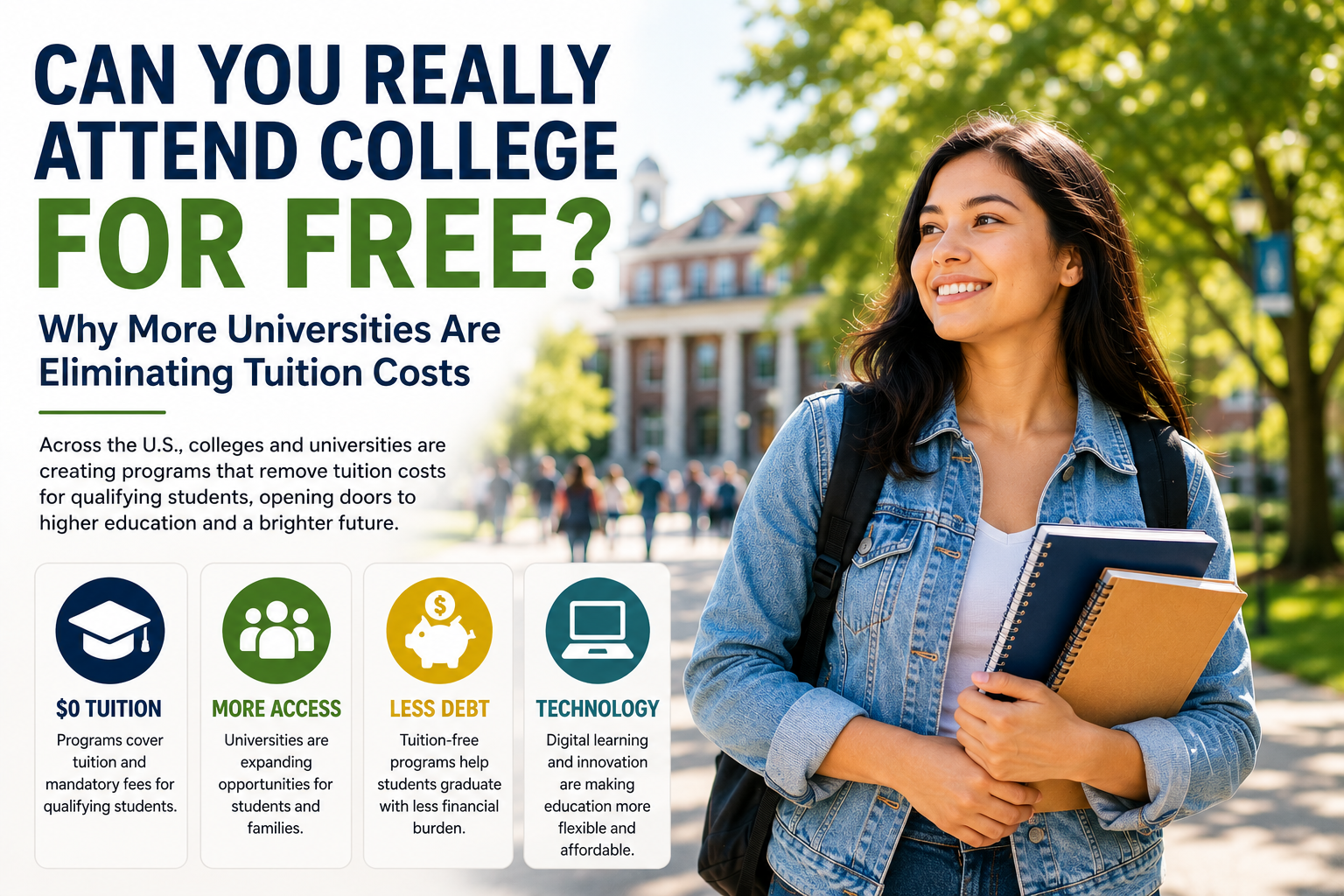
Can You Really Attend College for $0? Why More Universities Are Reducing Tuition Costs
Student loan debt has become one of the defining financial challenges facing modern higher education. For years, students and families have faced rising tuition costs, growing loan balances, and increasing concerns about whether a college degree remains affordable.
Yet while tuition prices continue to dominate headlines, a quieter trend is emerging across the United States.
A growing number of colleges and universities are introducing programs that reduce tuition costs to $0 for qualifying students. Instead of asking families to borrow more money, these institutions are expanding financial aid programs designed to make higher education accessible to students from a wider range of economic backgrounds.
Programs like UIC Aspire at the University of Illinois Chicago represent a significant shift in how universities are approaching affordability. For eligible students, the possibility of earning a four-year degree without paying tuition is no longer a distant idea. It is becoming a reality.
As concerns about college debt continue to shape the future of higher education, tuition-reduction programs are gaining attention from students, parents, educators, and policymakers alike.
Tuition Costs Remain a Major Challenge
The cost of attending college continues to be one of the biggest concerns for American families. In addition to tuition, students often face expenses related to housing, transportation, textbooks, technology, meal plans, and everyday living costs. These expenses can add up quickly, making higher education feel financially out of reach for many prospective students.
As a result, universities have increasingly focused on finding ways to improve affordability and reduce the financial burden placed on students. One solution gaining momentum is the expansion of programs that reduce tuition costs to $0 for eligible students.
The conversation surrounding college affordability has evolved considerably over the last decade. While scholarships and grants have long existed, many universities are now developing broader initiatives designed to ensure that financial circumstances do not prevent qualified students from pursuing higher education.
What Does College for $0 Actually Mean?
The phrase "college for $0" can sometimes be misunderstood.
In most cases, these programs cover tuition and mandatory university fees. Other expenses such as housing, books, transportation, meal plans, and personal costs may still apply depending on the institution and the student's circumstances.
However, eliminating tuition can dramatically reduce the overall cost of earning a degree. For many students, tuition represents the largest educational expense they face. Removing that cost can significantly reduce the need for student loans and long-term debt.
For families already managing household expenses, the ability to attend a university without paying tuition can transform what was once considered financially impossible into a realistic educational opportunity.
UIC Aspire: A Tuition-Free Opportunity for Illinois Students
One example of this growing movement can be found through the UIC Aspire program.
Designed for qualifying Illinois students, the program provides eligible participants with 100 percent tuition and mandatory fee coverage while pursuing an undergraduate degree. Students may qualify if they are Illinois residents, have family income and assets totaling $75,000 or less, are admitted as new first-year or transfer students, are pursuing their first bachelor's degree, and enroll in at least twelve credit hours each semester.
One feature that makes the program particularly noteworthy is flexibility. Unlike some tuition assistance programs, UIC Aspire does not require students to live on campus. Eligible students may commute from home or choose off-campus housing while still receiving tuition and fee coverage.
For many Illinois families, that flexibility can create additional savings beyond the tuition benefit itself. The program demonstrates how public universities are increasingly investing in affordability initiatives designed to expand educational access while helping students focus on academics rather than financial stress.
Why Universities Are Expanding Access
Universities are increasingly recognizing that affordability plays a major role in student success.
Students are evaluating educational options more carefully than ever before. Families often compare tuition costs, financial aid opportunities, graduation outcomes, and long-term financial impact before choosing a school. As a result, many institutions view affordability as both an educational issue and an economic development issue.
Reducing tuition barriers can increase access to higher education, reduce student debt burdens, improve graduation rates, support workforce development, create greater economic mobility, and expand opportunities for underserved communities.
A more educated workforce benefits students, employers, local economies, and society as a whole. As industries continue to evolve and demand new skills, expanding access to higher education remains a priority for many universities seeking to prepare students for future careers.
Other Universities Are Following Similar Paths
UIC is not alone.
Across the country, universities are introducing programs that reduce or eliminate tuition costs for students who meet certain financial requirements. Some schools guarantee tuition assistance for families below specific income thresholds, while others use expanded grant programs and institutional aid to reduce educational expenses.
Although each program operates differently, the overall goal remains the same: making higher education more accessible while reducing financial barriers.
As competition for students increases, affordability is becoming one of the most important factors influencing enrollment decisions. Universities understand that helping students graduate with less debt can have a lasting impact on both individual lives and broader economic outcomes.
Technology Is Changing Education Too
Affordability is not the only factor transforming higher education.
Technology continues to reshape how students learn, communicate, and access educational resources. Online degree programs, virtual classrooms, cloud-based collaboration tools, digital textbooks, video learning platforms, and AI-powered study resources have expanded educational opportunities beyond the traditional classroom environment.
Artificial intelligence is also beginning to play a larger role in academic support, helping students with research, tutoring, personalized learning recommendations, and study assistance. These tools are making educational resources more accessible while providing students with new ways to learn and develop skills.
Technology alone cannot solve affordability challenges, but it continues to create new pathways for educational access, flexibility, and lifelong learning.
What Students Should Do Before Applying
Students interested in tuition-reduction programs should begin planning early.
Completing financial aid applications, researching eligibility requirements, understanding what expenses are covered, meeting application deadlines, and exploring additional scholarship opportunities can significantly improve the chances of receiving financial assistance.
Many students may qualify for programs without realizing they are eligible. Taking the time to research available options can make a meaningful difference when planning for higher education and reducing future financial burdens.
Looking Ahead
The future of higher education continues to evolve.
As concerns about affordability and student debt remain at the forefront of public discussion, universities are increasingly exploring new ways to expand access and reduce financial barriers.
Programs like UIC Aspire demonstrate that earning a college degree without paying tuition is becoming a realistic possibility for many students. While these programs may not eliminate every educational expense, they represent an important shift toward making higher education more attainable for families across the country.
For many students, the idea of attending college for $0 is no longer just a possibility.
It is becoming a reality.
Continue Reading
Higher education is evolving rapidly, and affordability is only one part of the story. Technology is also transforming how students learn, access resources, and prepare for the future workforce.
Related Article: 5 Ways Technology Is Helping Close the Education Gap in 2026
About PictureThisInk®
PictureThisInk® is an independent digital media publication covering technology, artificial intelligence, innovation, digital culture, education, cybersecurity, consumer technology, and emerging trends shaping the future.
Explore our latest coverage, discover new ideas, and stay informed on the innovations transforming everyday life.
Website: https://www.picturethisink.com
Contact: https://www.picturethisink.com/contact
PictureThisInk® — Technology, Innovation, Education, and the Future of Modern Life.