
5 Ways the New Caption Rule Should Make TV Easier to Use
Published by PictureThisInk · Powered by MisherTech
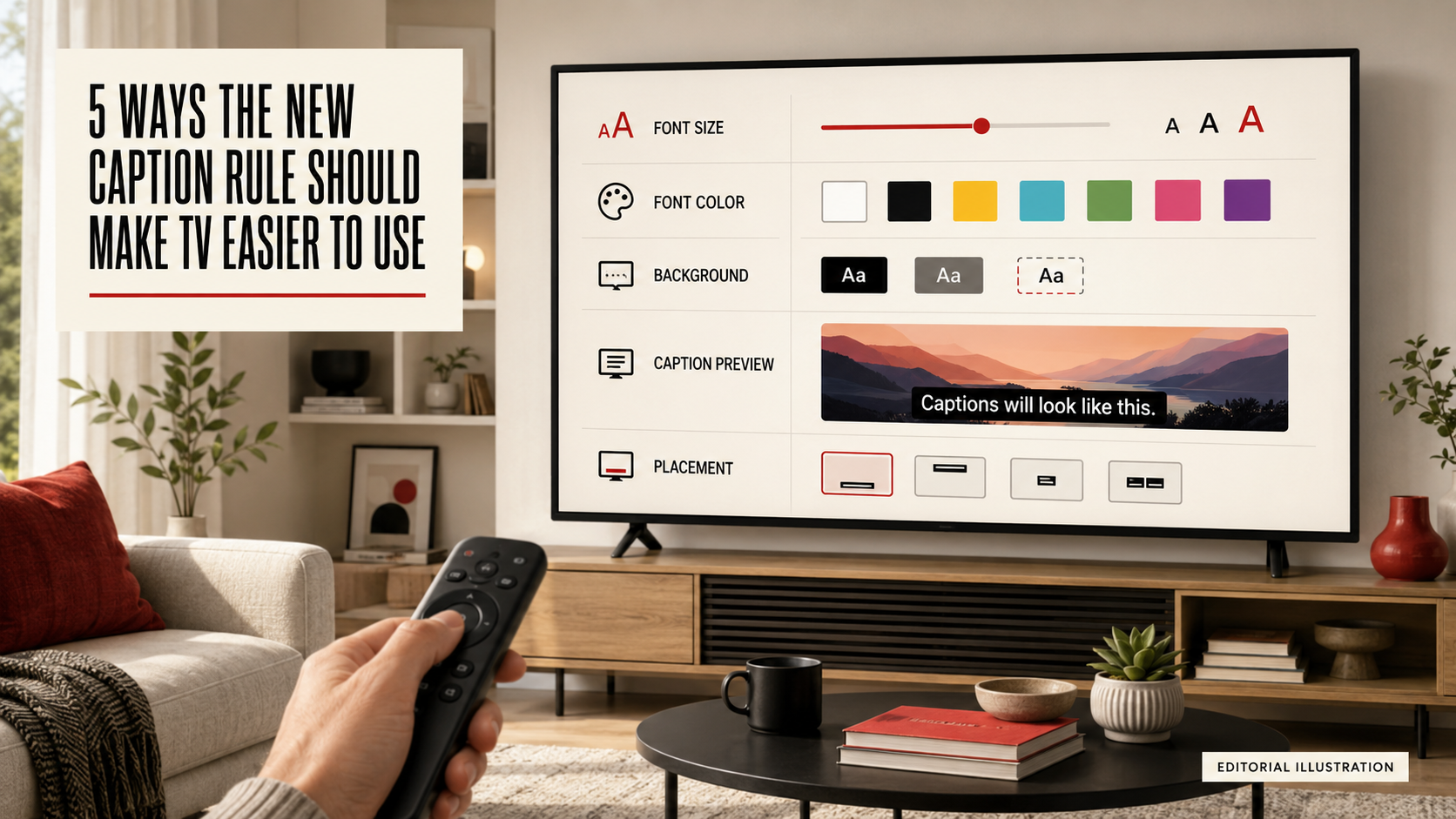
Closed captions only help when people can find the controls, read the words, and make the display comfortable for their own eyes. A new federal accessibility requirement focuses on that everyday experience.
Caption Controls Are Supposed to Be Easier to Reach
An updated Federal Communications Commission requirement calls for closed-caption display settings on covered video equipment to be readily accessible to people who are deaf or hard of hearing. The compliance deadline arrived in August 2026 for covered equipment subject to the rule.
The settings can include a caption’s font, size, color, background, and opacity. These choices affect far more than appearance. A caption that is too small, low-contrast, or hidden against the video can turn an accessibility feature into another obstacle.
The new standard is built around a simple idea: a useful control should not require a scavenger hunt. Here are five ways the rule is intended to improve the experience.
1. Related Settings Should Be Kept Together
The FCC’s compliance guide says manufacturers and covered video providers should consider how close caption controls are to other display settings. If font size, color, background, and opacity options are scattered across unrelated menus, customizing captions becomes unnecessarily difficult.
Keeping related controls in one logical area can reduce the number of screens a viewer must open. Good accessibility often begins with good organization.
2. Viewers Should Be Able to Find the Controls
Discoverability is one of the FCC’s listed factors. The name, location, and visual presentation of a caption control should help a person recognize what it does.
A buried setting technically exists, but it may still fail the person who needs it. Clear labels, sensible menu placement, and direct access can make the difference between captions that are merely available and captions that are actually usable.
The FCC’s consumer guide to caption-display requirements explains the broader expectation that covered equipment let viewers adjust how captions appear.
3. Changes Should Be Previewable
The rules also address previewability. A viewer should be able to see what a selected font, color, size, background, or opacity choice will look like before leaving the settings area.
That immediate feedback matters because accessibility needs are personal. One person may prefer large white lettering on a black background, while another may need a different color or transparency level. A live preview turns customization from trial and error into a choice a viewer can make with confidence.
4. Settings Should Work More Consistently
The FCC asks covered manufacturers and providers to consider consistency and persistence. Where technically feasible, operating-system settings and programming interfaces can help caption choices carry across video apps instead of forcing viewers to repeat the same setup.
That does not mean every television, streaming app, and connected device will suddenly use an identical menu. Older equipment, certain third-party applications, and some technically limited products may not be covered in the same way. The goal is a more dependable experience on equipment that falls under the requirement.
5. Companies Should Test With the People Who Use Captions
The FCC guide points to consumer testing, including work with people who are deaf or hard of hearing and organizations that represent them. It also identifies staff training and good-faith efforts to correct accessibility problems.
The strongest accessibility design comes from listening to the people who experience the barrier. A menu that seems obvious to its designer may not be obvious to someone navigating a new television, remote, cable box, or streaming interface.
What Viewers Should Expect
The rule covers specific manufacturers and multichannel video programming distributors, and exceptions can apply. Equipment manufactured before the compliance deadline is generally not pulled into the new requirement, some third-party apps may be outside a device maker’s control, and small screens can be subject to an achievability analysis.
So the change will not make every caption menu identical overnight. It does create a clearer standard for newer covered equipment: settings should be close at hand, understandable, previewable, and supported by people who know how to help.
For millions of viewers, better captions are not an extra feature. They are part of being able to follow the story at all.
Sources
Comments
No approved comments yet. Be the first.
Related Articles

5 Android Accessibility Tools That Can Make Everyday Tasks Easier
 PictureThisInk Editorial· 3 min read
5 New ChatGPT Updates That Make Everyday Use Easier
PictureThisInk Editorial· 3 min read
5 Ways to Take Back Mental Control in a World That Never Stops Thinking
PictureThisInk Editorial· 1 min read