
YouTube Is Changing the Rules of Creator Income
Published by PictureThisInk · Powered by MisherTech
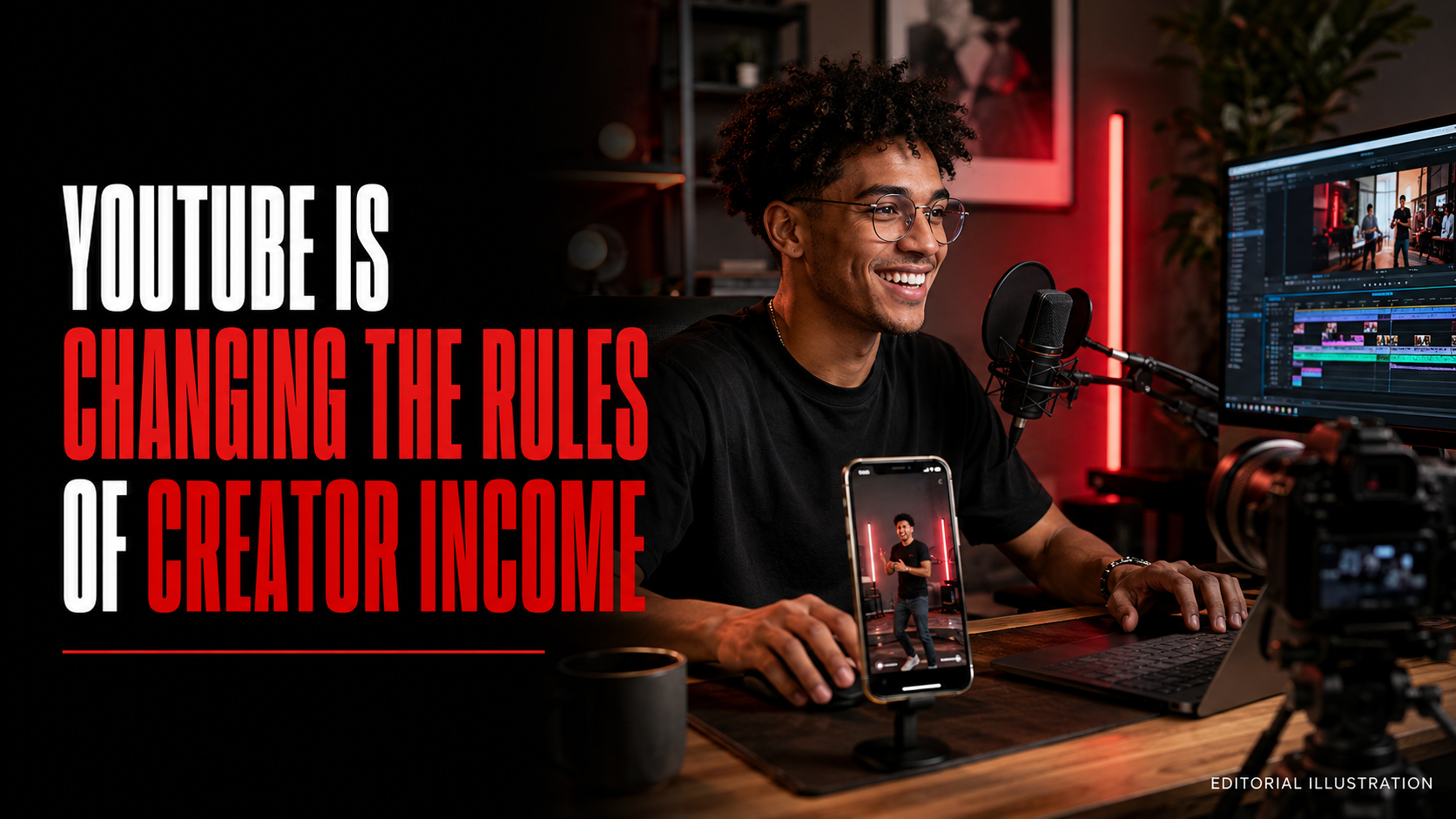
A creator can build an audience one video at a time. Platform economics can change with a single update.
New Thresholds Arrive in February
YouTube has announced significant changes to the YouTube Partner Program that are scheduled to take effect on February 1, 2027. The update affects new applicants seeking ad and YouTube Premium revenue sharing, along with channels earning from Shorts.
Under the official YouTube announcement, new creators applying for ad and Premium revenue sharing will need either 8,000 qualified watch hours during the previous 365 days or 20 million qualified Shorts views during the previous 90 days.
YouTube says this change will not affect creators who are already in the Partner Program. The lower entry requirements for fan-funding and shopping products are also staying in place.
The Partner Program is not disappearing, but the route to its advertising revenue is becoming steeper for the next group of applicants.
Shorts Revenue Will Have Its Own Line
Beginning February 1, channels will need 10 million qualified Shorts views over a rolling 90-day period to receive advertising and subscription revenue sharing from Shorts. YouTube says a channel below that level can remain in YPP and continue earning from eligible long-form content.
Shorts revenue sharing is expected to resume automatically when the channel crosses the threshold again. That distinction is essential: falling below 10 million qualified Shorts views does not, by itself, remove a creator from YPP under the announced policy.
YouTube says creators already generating significant Shorts revenue are unlikely to be affected. It also plans new incentives tied to areas such as YouTube Shopping, brand deals and starting or growing trends, although complete details have not yet been released.
Creators should therefore separate firm policy from future promises. The thresholds and effective date have been announced. The value, eligibility and availability of the coming incentive programs remain incomplete.
A Channel Needs More Than One Income Engine
The changes reinforce a lesson independent creators have learned repeatedly: platform revenue is useful, but it is not fully under the creator’s control. A business built entirely around one format and one eligibility calculation can change quickly when the platform adjusts its economics.
That does not mean creators should abandon Shorts. Short video can still introduce work to new audiences and lead viewers toward longer content. It does mean each format should have a clear role. Shorts might drive discovery, long-form videos may deepen trust, memberships can stabilize recurring support and products or services can create revenue outside advertising.
The healthiest creator business does not ask one platform feature to perform every job.
An owned website, newsletter or customer list can also preserve audience relationships when recommendation systems or monetization rules change. Those channels may grow more slowly, but they reduce dependence on a platform-controlled switch.
What Creators Should Do Before February
Creators already in YPP should review the new terms in YouTube Studio and confirm which revenue streams the changes affect. New applicants should compare their current watch hours and qualified Shorts views with the announced thresholds rather than relying on general subscriber growth alone.
It is also worth auditing the content mix. A channel close to a watch-hour threshold may benefit from stronger long-form series and better connections between related videos. A Shorts-heavy channel should evaluate whether viewers are moving toward longer content, shopping, memberships or outside offers.
None of those steps guarantees approval or earnings. YouTube still applies its broader program rules, and qualified metrics can differ from the raw numbers visible in ordinary analytics.
The update creates pressure, but it also creates time. The effective date is months away. Creators who treat the change as a business-planning signal—rather than an invitation to chase views at any cost—will be in a stronger position when the new rules begin.
Sources
YouTube Blog — New opportunities to earn and changes to the YouTube Partner Program, August 10, 2026
YouTube Blog — What’s coming to YouTube in 2026, January 21, 2026
Comments
No approved comments yet. Be the first.
Related Articles

Building a Brand That Feels Human in a Digital World
 Maya Render· 1 min read
Google’s New Vibe Coding Course Is a Signal to Small Business Owners
 PictureThisInk Editorial· 1 min read
How Ordinary People Are Using AI to Build Real Income in 2026
 Devon Kane· 1 min read