
Make Money Online? The SBA Now Says You're a Small Business. Here's What That Means.
Published by PictureThisInk · Powered by MisherTech
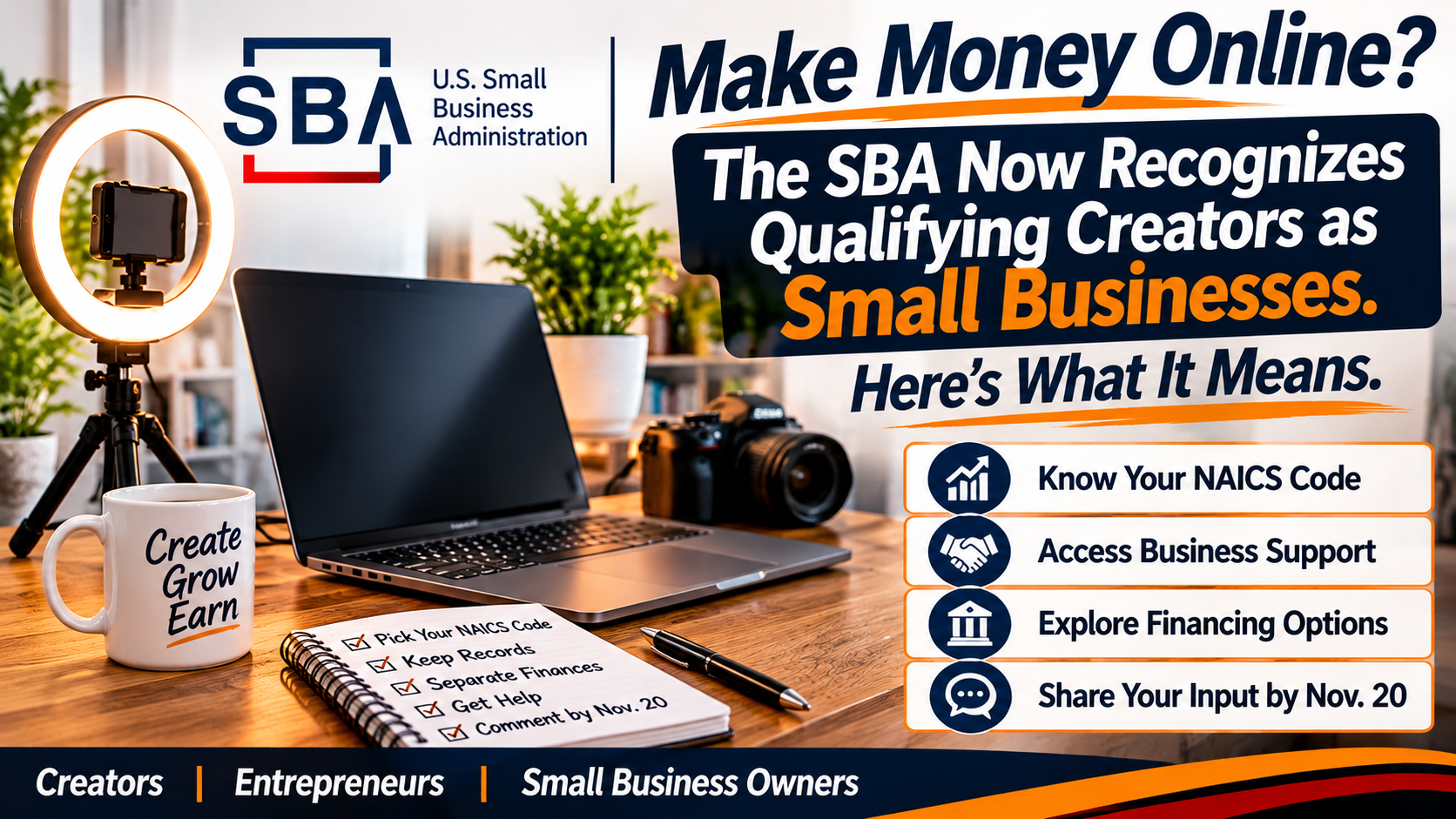
Millions of Americans now earn some or all of their income online: a cooking channel, a weekly podcast, a streaming hobby that started paying, a newsletter with sponsors. For years, many of them hit the same wall when they tried to get a business loan or local business help. What kind of business am I, officially?
On October 15, 2026, the U.S. Small Business Administration answered that question. For the first time, the agency issued guidance that specifically names content creators within its small-business framework. SBA Administrator Kelly Loeffler put it simply: "America's creators are entrepreneurs who build businesses from original ideas."
What actually changed
The guidance tells creators which industry code to use: NAICS 5121, the Motion Picture and Video Industries group. NAICS codes are how the federal government classifies businesses. They matter because SBA programs set eligibility rules, like size limits, by industry.
The SBA says the guidance covers filmmakers, video producers, podcasters, streamers, gamers, digital publishers, social-media entrepreneurs and creative agencies. The agency estimates there are 27 million creator-led businesses in the country.
Creators should start with 5121, then pick the specific six-digit code that best matches their main activity.
What it does not do
This part gets lost in the headlines, so it's worth being clear.
• It doesn't create new money. No new grant or loan program comes with this guidance.
• You weren't ineligible before. Creator businesses could already use SBA programs if they met the requirements. The guidance mainly clears up confusion about which code to use.
• It doesn't change your taxes. An industry code on its own doesn't change what you owe.
• You still have to qualify. Every SBA program has its own rules about size, credit, time in business and paperwork.
In short, it's a door, not a deposit. But for many creators, the door was the problem.
Why it still matters
Creators have mostly been funding themselves. A 2025 Visa report found that 68% of surveyed creators see themselves as small business owners, yet 86% pay for their operations with personal money and 47% lean on friends or family. Only 19% use business credit or debit cards.
That's a fragile way to grow. Official recognition makes it easier to walk into a lender or a local business center and be taken seriously, with a clear answer to "What industry are you in?"
Five steps to take this month
1. Pick your code and write it down. Look up the NAICS 5121 codes, choose the one that fits your main income source, and record it in your business files with the date and your reasoning.
2. Keep your paperwork consistent. Your business structure (sole proprietor, LLC and so on), tax filings and any loan application should tell the same story. Ask an accountant whether your code should match what you file.
3. Separate your money. If you haven't already, open a business bank account and track creator income and expenses there. Lenders want clean records.
4. Get free help. The SBA's network of local partners, including Small Business Development Centers and SCORE mentors, offers free or low-cost counseling. Bring your income records and ask what you might qualify for.
5. Have your say by November 20. The SBA is also proposing changes to size standards for the 5121 industry group and is weighing a possible permanent exception for creators. Public comments close November 20. If you run a creator business, your input counts.
The bigger picture
Creator work used to be treated as a hobby that happened to pay. Platforms, banks and now the federal government are starting to treat it as what it often is: a real small business with real costs. If you're building one, now is a good time to start running it like one.
Sources
• U.S. SBA clarifies small business classification for 27M creator-led businesses (Net Influencer)
• SBA recognizes content creators as small businesses under new guidelines (Small Business Trends)
• SBA guidance places creator businesses in the small business system (SelfEmployed)
Comments
No approved comments yet. Be the first.
Related Articles

600 Startups Just Walked Into Riyadh
 PictureThisInk Editorial· 4 min read

Big Ideas Meet in Boston Before They Meet the Market
PictureThisInk Editorial· 4 min read
Gatik Raises $200 Million to Scale Driverless Middle-Mile Delivery
PictureThisInk Editorial· 4 min read